
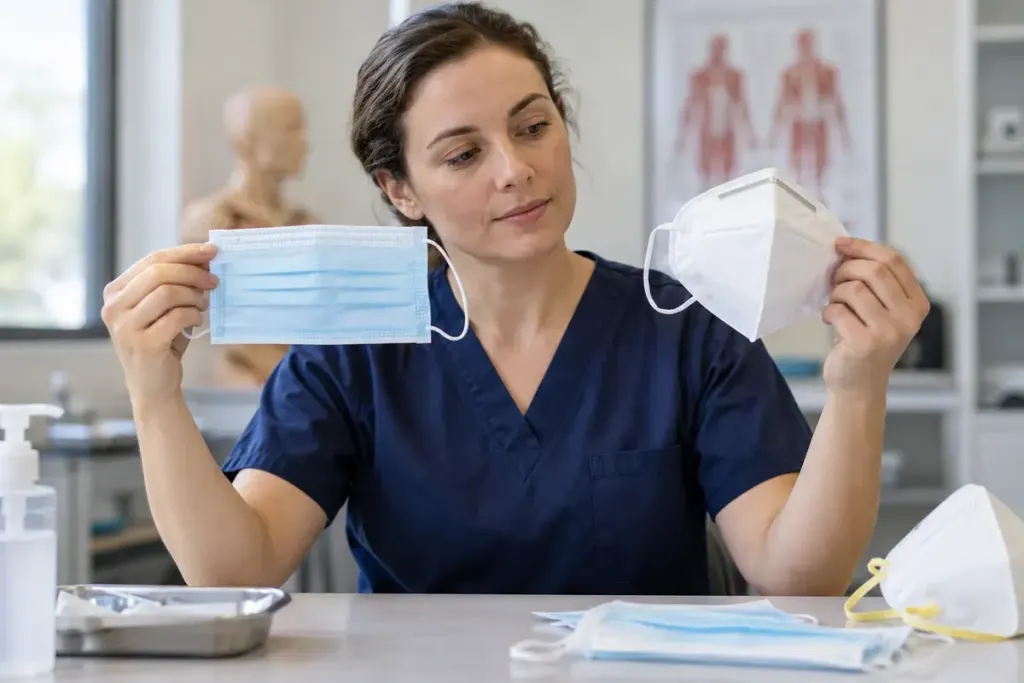
Two products cover the nose and mouth, but that visual similarity does not make them interchangeable. A surgical mask and a respirator are designed and evaluated for different purposes, and the distinction matters when selecting workplace protection.
The CDC’s NIOSH guidance on healthcare respiratory protection explains differences in design, performance and intended use. The specific protection required should follow the task, exposure assessment and applicable workplace programme.
Look beyond the shape of the product
A surgical mask provides a barrier for medical purposes but is not designed to seal to the face in the same way as a tight-fitting respirator. A respirator’s performance depends on selecting an appropriate approved model and using it correctly.
For tight-fitting respirators, fit testing and the workplace’s required checks are important. A user seal check is not a replacement for a fit test. Facial hair or changes in fit can interfere with the seal, so follow the occupational-health and manufacturer instructions.
Do not infer approval from a product photograph or a broad phrase such as “medical grade.” Check the actual model, markings and relevant approval information. Requirements vary by jurisdiction and intended use.
Make procurement and use part of the same process
A purchasing list should identify the required product type and model rather than simply requesting “masks.” Staff also need training in putting it on, removing it, storage and replacement according to the applicable instructions.
If a product is uncomfortable or does not fit, raise the issue through the workplace programme instead of modifying it or substituting an unapproved item independently. A different suitable model may be needed.
For clinical teams, the practical question is not which face covering looks more substantial. It is which protection the task requires and whether the selected product can be used correctly by that worker. This article explains the distinction; it does not replace an employer’s exposure assessment or respiratory-protection procedures.