
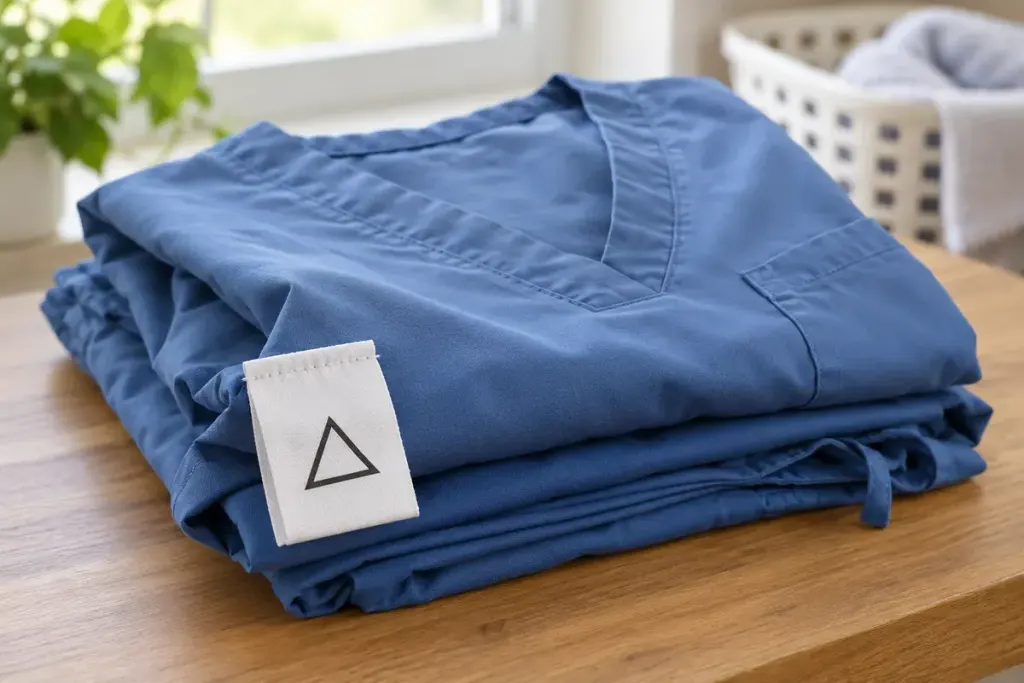
A stubborn mark on scrubs can make bleach seem like the obvious next step. Before choosing a product, look for the triangle on the care label. It describes whether bleaching is permitted and, in some cases, which kind.
The GINETEX care-symbol guide explains the system: an empty triangle permits bleaching, two diagonal lines restrict it to oxygen or non-chlorine bleaching, and a crossed-out triangle means do not bleach.
Read the garment and the product together
A permitted process is not an instruction to use any concentration or soaking time. Follow the garment label and cleaning product directions, including compatibility, dilution and handling. Do not mix cleaning chemicals.
Check the whole uniform, including trims, prints, elastic panels and contrasting colours. A fabric’s main fibre does not fully describe every part of the garment.
Separate stain removal from workplace hygiene
The care label tells you about textile treatment. Your employer’s laundering or infection-control procedures may impose additional requirements, including when garments must be handled through a designated service. Follow those procedures rather than using a household stain method as a substitute.
If the label is missing or unreadable, identify the exact garment with the manufacturer or uniform supplier before experimenting. A recommendation for a similar-looking scrub top may not apply to yours.
For ordinary permitted home care, note the stain and the approved method used. Stop if colour or texture changes. Repeated stronger treatment can damage a garment without resolving why the mark remains.
A useful wardrobe record includes a photograph of the care label taken when the uniform is new. It makes later decisions easier, especially when several similar tops have different instructions. The small triangle can prevent a large, avoidable change to the garment’s colour and service life.