
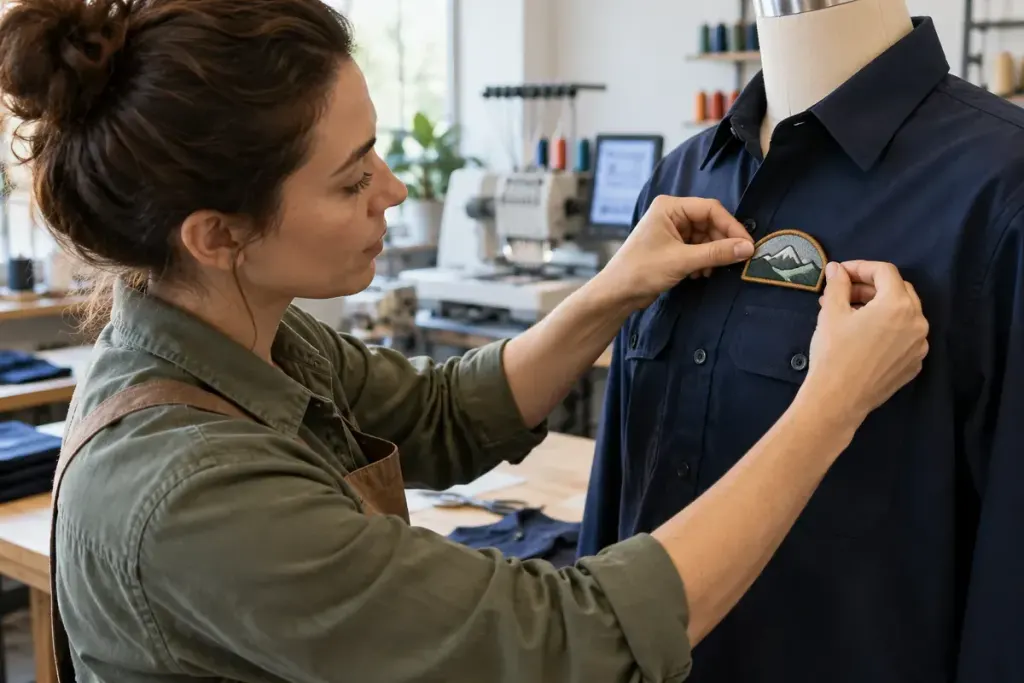
A logo can be straight and neatly stitched while still making a uniform less useful. If embroidery catches a pocket closed or sits where a badge must clip, the decoration has interfered with the garment’s job.
Before approving an order, examine the actual garment style and size range. A placement that looks balanced on a flat photograph may overlap a seam or pocket opening when applied to a different size.
Mark the usable space
Ask the embroiderer to identify a suitable area using the garment itself. Check pocket access, buttons, zips and any existing branding. If the design is intended for the pocket face, confirm how the supplier will avoid stitching through layers that must remain separate.
Use a paper mock-up or temporary placement guide to judge scale. View it on a wearer or appropriate form where possible, following workplace fitting arrangements. The point is to see the mark in use, not only at embroidery-machine distance.
For clinical or protective workwear, follow the employer’s requirements and the garment manufacturer’s restrictions. Do not assume that personalising a garment preserves any protective or specialist performance claim.
Approve a sample with practical checks
Inspect the reverse side as well as the front. Check the finish, stabiliser and any contact with the skin. Open the pocket and place a normal permitted item inside to confirm it remains usable.
Verify the exact spelling, credentials and role wording before production. Do not add professional titles that the wearer is not entitled to use. Keep the approved artwork, thread colours and placement measurements with the order.
Where appropriate, test laundering according to the garment and embroidery instructions before committing to a large quantity. A good sample should demonstrate both appearance and function. The best placement is one the wearer can forget about while doing the work, because the pocket, fastening and identification still operate as intended.