
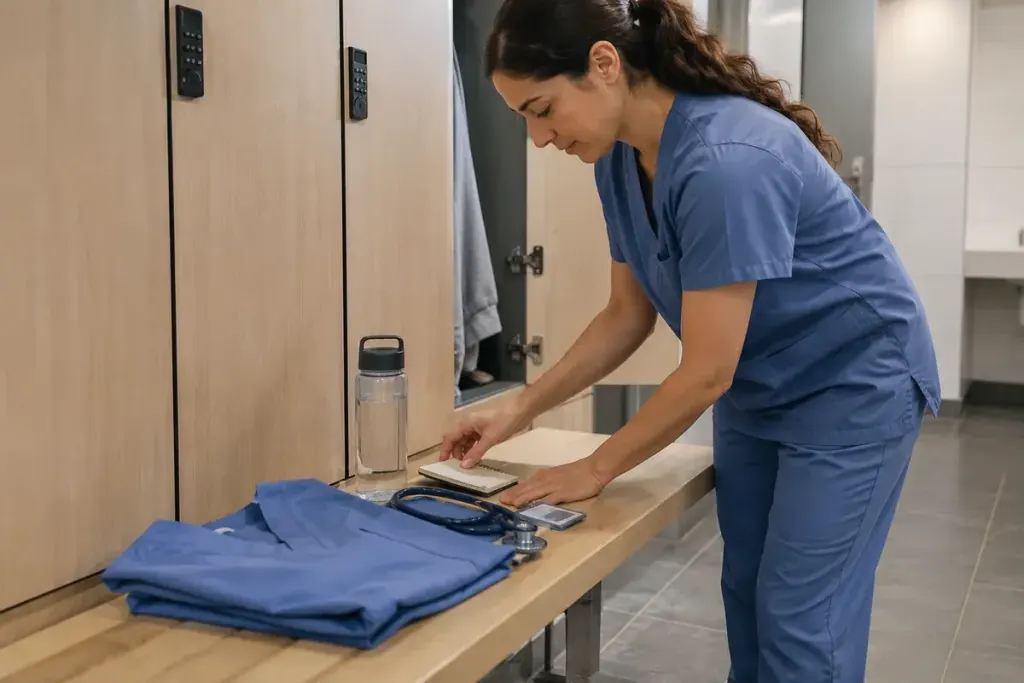
A pocket full of spare items feels prepared until the object you need is buried beneath things you have not used all week. In a clinical setting, the question is not how much a uniform can carry. It is what should be carried, where and under which workplace rules.
Start with your organisation’s infection-prevention, security and uniform policies. Pocket organisation must support those requirements rather than create an unofficial storage system.
List tasks before objects
Identify the routine tasks that genuinely require a personal item at hand. Check whether equipment should instead remain at a designated station. Avoid carrying extras solely because a pocket is available.
Test the uniform’s fit with the permitted load. Bending, reaching and walking should not cause items to fall out or pull the garment awkwardly. Choose storage that suits the role and the item, not just the largest pocket.
Keep clinical boundaries clear
The CDC’s Standard Precautions overview places hand hygiene, appropriate protective equipment and safe equipment handling within patient care. Ordinary scrub pockets do not create a clean or sterile storage environment.
Never use a pocket for sharps, contaminated items or materials that require designated disposal or reprocessing. Follow local procedures for equipment moving between patients. A fabric’s marketing claim does not replace those procedures or make ordinary workwear protective equipment.
Use a consistent arrangement
Where policy permits, assign a regular place to a small number of items so you can notice what is missing. Keep personal possessions and work items separated appropriately. Protect patient information and avoid retaining notes or identifiers outside approved systems.
An illustrative preparation check might ask: is each item permitted, necessary, in suitable condition and stored appropriately? If an item fails one of those questions, adding another pocket is unlikely to solve the problem.
Reset at the end of the shift
Empty and check pockets before the garment enters the approved laundry process. Return equipment, dispose of waste correctly and handle information under workplace policy. Follow the uniform’s care instructions alongside the employer’s requirements.
Review the arrangement after a few shifts. Which items were useful, and which were carried without a clear purpose? A lighter, consistent setup can make everyday work more orderly, but its success depends on fitting the actual clinical environment. The pocket system should remain a small support for safe practice, never a substitute for it.