
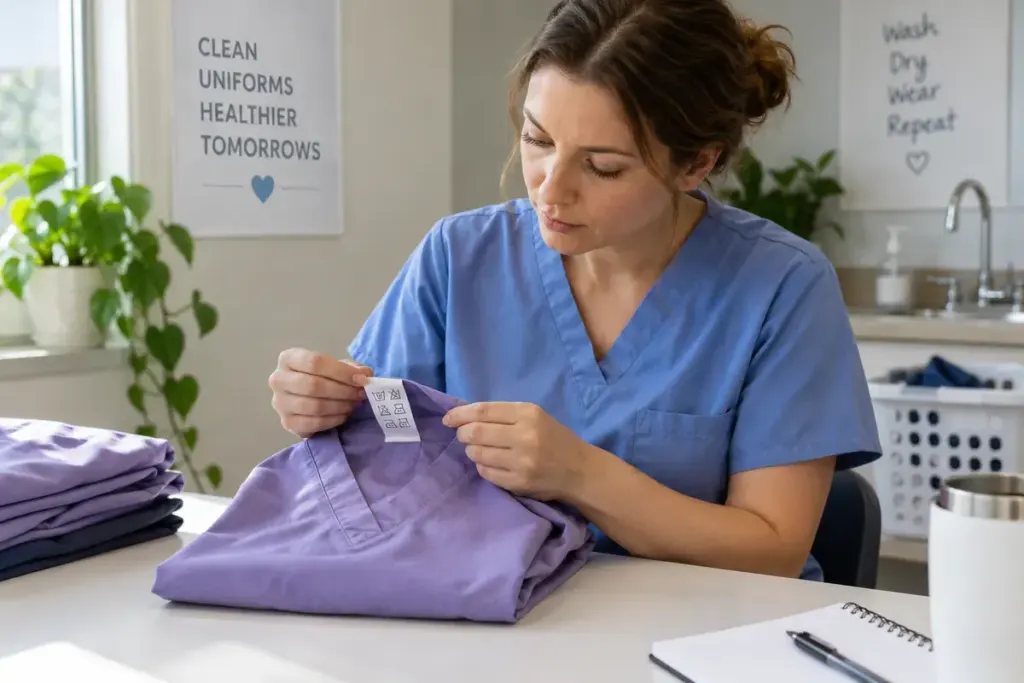
A scrub top advertised as antimicrobial can sound as though it needs less careful handling. Before drawing that conclusion, read what the claim actually covers. Protection of a textile against deterioration or odour is a different proposition from protection of a wearer or patient against infection.
In the United States, the EPA’s guidance on treated consumer products explains that the treated-articles exemption concerns protection of the product itself. It does not turn that treatment into a public-health protection claim. This regulatory explanation has a US scope; other markets have their own rules.
Ask what was measured
Look for the precise material claim, its limitations and the manufacturer’s care instructions. A statement about bacteria affecting fabric does not, by itself, demonstrate a reduced infection risk in a healthcare setting. Nor does the word antimicrobial identify every organism, test condition or duration involved.
If a supplier refers to testing, ask for the relevant product documentation rather than applying a result from an unrelated fabric. A general brand brochure may not answer a question about the particular garment you are ordering.
Keep workplace procedures in charge
Check the uniform against your employer’s approved clothing and laundering requirements. Do not interpret a fabric treatment as permission to extend wear, ignore contamination procedures or substitute ordinary scrubs for protective equipment required for a task.
Where care instructions and workplace requirements appear incompatible, ask the responsible supervisor or infection-prevention team before using the garment. Avoid inventing a hotter wash or an extra chemical treatment: the appropriate process depends on the garment and workplace policy.
For purchasing notes, separate three items: what the supplier claims, the evidence supplied for that exact product, and whether it meets the workplace’s requirements. That makes comparisons more useful than a simple antimicrobial yes-or-no box, while keeping an appealing fabric feature in its proper place.