
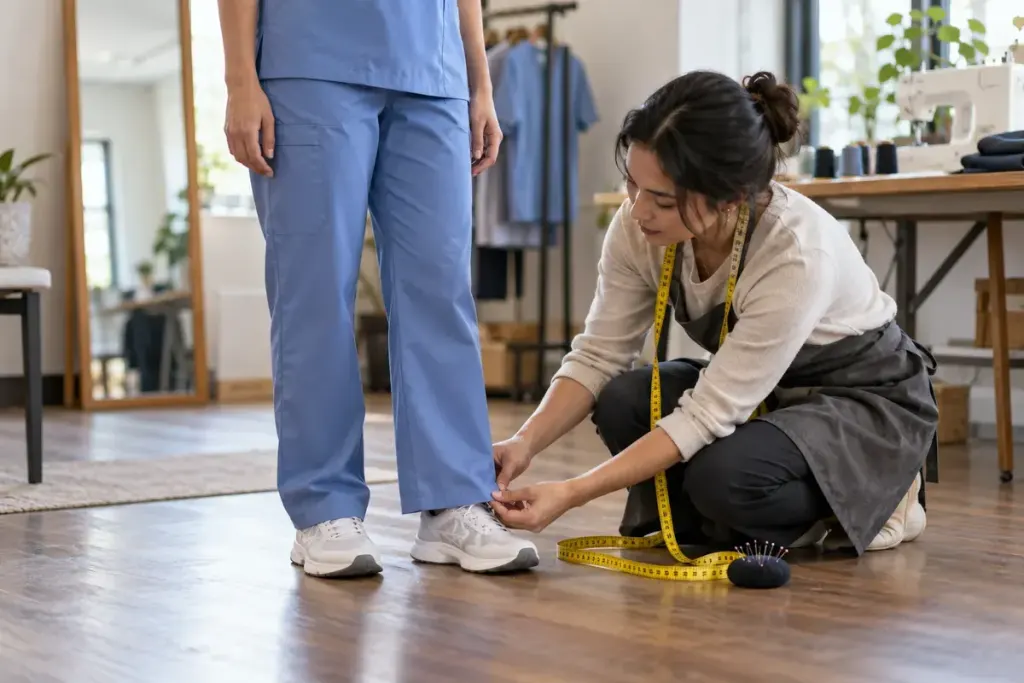
A trouser hem drags on the floor, so shortening it seems obvious. Before cutting, check whether the uniform is yours to alter and whether the proposed change affects a feature required for the work.
Employer policies, supplier instructions and the garment’s function matter. A standard uniform and a garment with protective properties are not interchangeable alteration projects. Do not modify protective clothing or required identification features without the appropriate approval and competent guidance.
Describe the problem before choosing the alteration
Explain what happens during normal movement: the hem catches, a pocket pulls, or the sleeve interferes with a task. A different size or cut may solve the problem better than removing fabric from the current garment.
If alteration is approved, take the usual work footwear to the fitting. Ask the tailor to assess the relevant movements while keeping the fitting safe and appropriate. Standing still in unfamiliar shoes can give a misleading result.
Preserve useful features
Check pocket access, seams, vents, closures and any labels or markings that need to remain. Shortening a sleeve may affect its opening; narrowing a leg may change movement. The goal is not merely a tidy silhouette in a mirror.
For an illustrative fitting record, note the approved change, the garment size and the footwear used. Ask whether washing according to the care label should happen before final measurement, particularly if the supplier identifies shrinkage considerations.
Before collecting several altered items, inspect one completed example. Move as the work requires and check the stitching and comfort. It is easier to correct the specification before every garment has been changed.
Keep the original care instructions with the uniform and tell the person handling laundry about any approved change that affects care. If a fit issue creates an immediate safety problem, raise it with the employer rather than relying on a temporary pin or improvised fastening during work.
A successful alteration is one that fits the person, the garment and the workplace requirements together. The scissors should be the final step in that decision.