
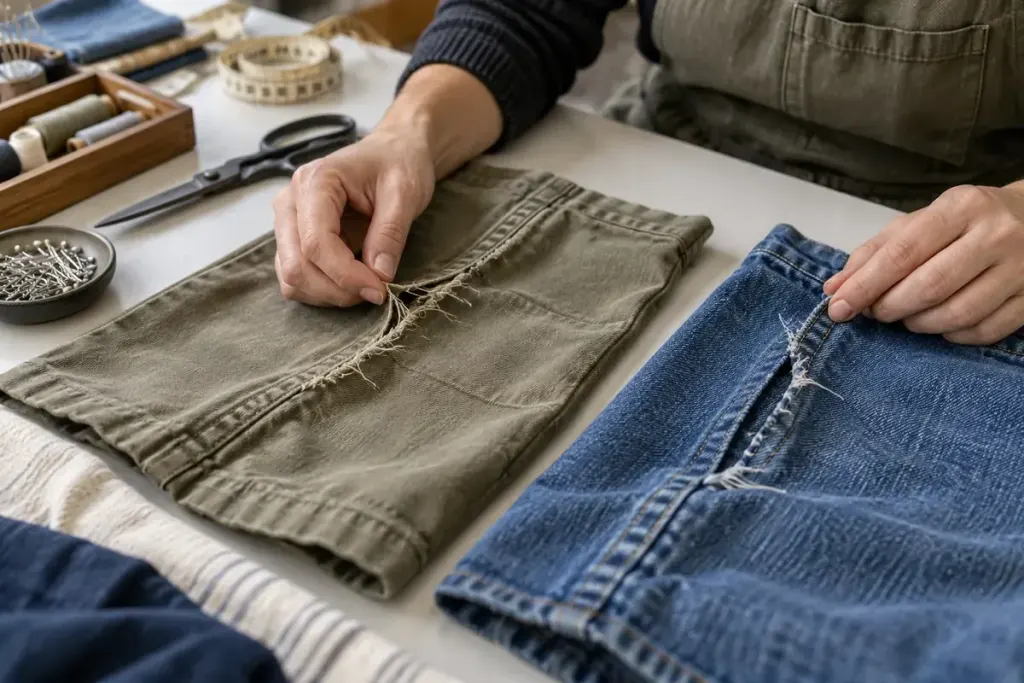
A seam opens at the hip of a pair of work trousers. Looking closely, you may find snapped thread, or you may find intact stitches with fabric yarns pulled apart beside them. Those observations point to different repair questions.
Coats’ technical FAQ describes seam slippage as fabric yarns moving away from a seam and leaving a gap. Although that page addresses manufacturing questions in footwear, the distinction between displaced fabric yarns and broken stitching helps explain what to look for in a woven garment.
Inspect without pulling the damage wider
Lay the clean garment flat in good light. Look at both sides of the affected area and note whether the thread has broken, the fabric has torn, or the yarns have shifted beside the stitch line. Do not force the seam apart to make the problem easier to photograph.
A repair specialist may be able to replace failed stitching when the surrounding material remains sound. If the fabric itself has distorted or weakened, simply sewing over the same line may not restore a dependable seam. Fit, seam allowance, material condition, and the garment’s intended use all matter.
For a useful repair request, provide a close photo, a wider photo showing the location, and a description of when the gap appeared. “Thread intact; gap beside stitches” is clearer than “seam broken.”
Protective or workplace-specified clothing needs additional care. Do not assume that a home repair preserves certified performance or satisfies an employer’s requirements. Ask the responsible supplier or workplace contact whether repair is permitted and what replacement criteria apply.
Identifying the failure first avoids spending time on a repair that addresses the wrong component. The question is not only whether a needle can close the opening, but whether the surrounding garment can support a suitable repair.