
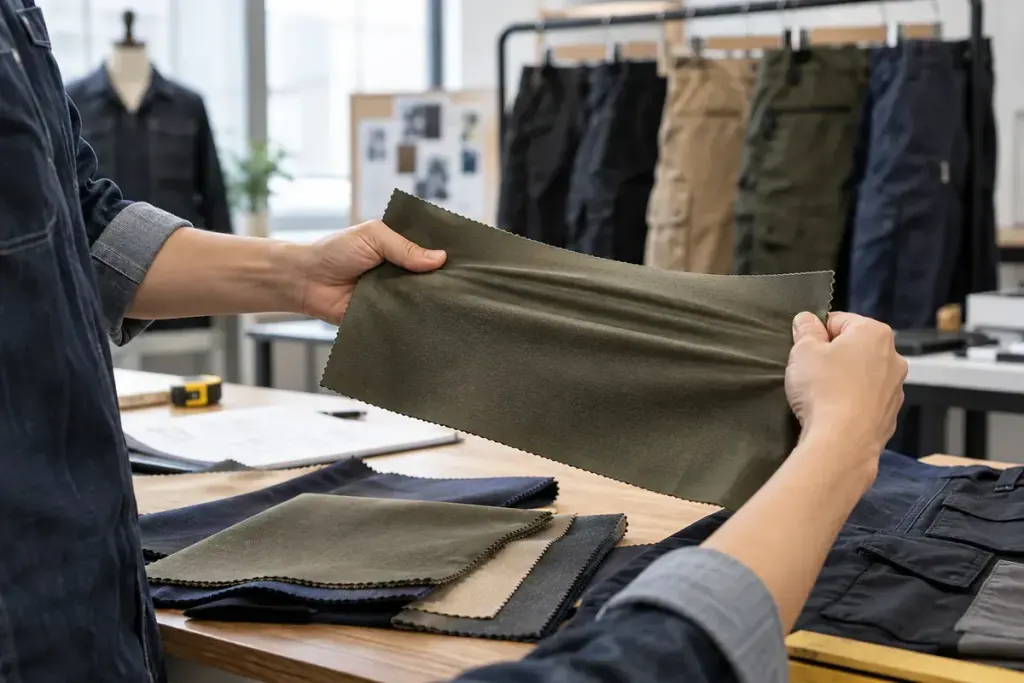
A fabric stretches easily in the fitting room, but the knees look baggy later in the day. Stretch and recovery are related properties: one describes how the material extends, while the other concerns how it returns after the force is removed.
You do not need to pull a garment aggressively to assess it. Try the movements the trousers are intended to accommodate, within the retailer’s fitting rules and without damaging the item.
Compare before and after movement
Check the fit standing, sitting and bending comfortably. Notice the waistband, knees and seat. After a short period of ordinary movement, stand again and see whether the garment settles back or remains noticeably distorted.
A little ease is different from a poor fit. Trousers that are too tight can stretch continuously during wear, while an overly loose pair can fold and catch even when the fabric itself performs well.
Read more than the stretch-fibre percentage
The fibre label is useful, but construction, cut and fabric weight also influence behaviour. Two garments with a similar percentage of elastane can feel different. Compare the actual product rather than choosing from a number alone.
Follow the care label, including washing and drying limits. Heat and unsuitable care can affect the garment’s performance. Do not assume that a uniform-care routine suitable for one fabric is correct for every stretchy blend.
Workplace requirements take priority where particular garments or protective standards apply. Ordinary stretch workwear is not automatically protective equipment, and comfort claims do not establish suitability for a specific hazard.
If buying several sets, trial one where practical and note how it behaves through authorised wear and care. Keep the product code and size so later orders match the tested item.
The useful question is not “How far can I stretch this?” It is whether the trousers support the required movement, return to a usable shape and remain appropriate for the job after repeated care.