
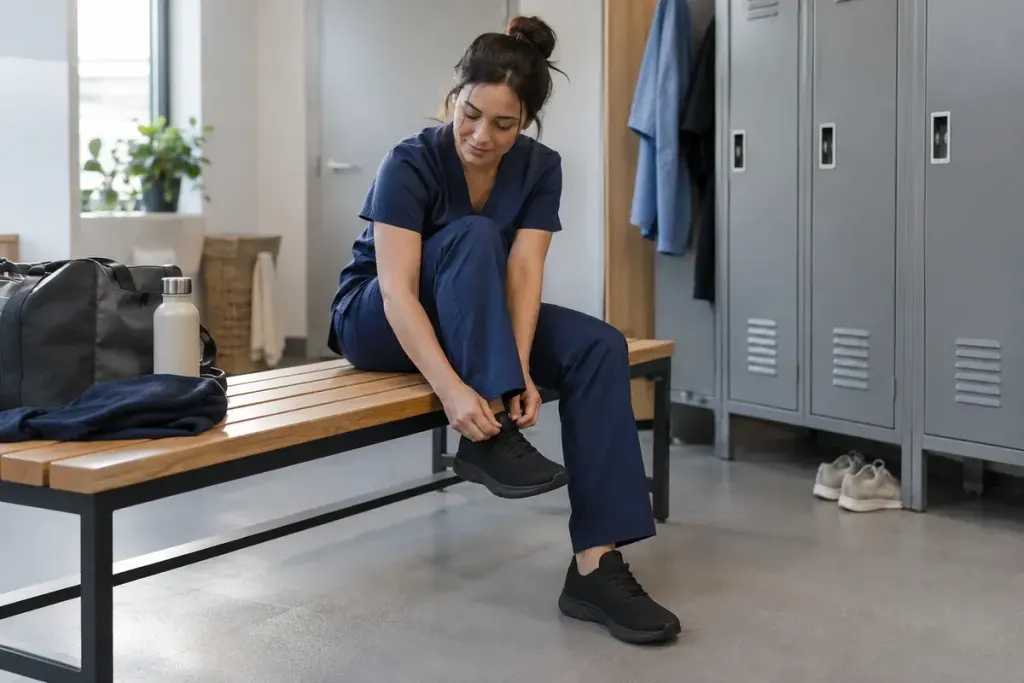
A pair of work shoes feels comfortable during a quick morning try-on. By the end of a long shift, the toes feel crowded and the heel rubs. The first impression did not capture the conditions in which the shoes had to work.
Choosing footwear for healthcare means considering fit alongside the workplace’s infection-control and safety requirements. A soft lining or a familiar size number is only part of that decision.
Start with the workplace specification
Check rules about coverage, materials, cleaning and slip resistance before comparing styles. A shoe described as suitable for work may not meet the requirements of your particular role or environment.
The UK Health and Safety Executive’s slip-prevention guidance includes footwear among several interacting factors. No shoe makes a contaminated floor or unsuitable work practice harmless, and a general safety label does not answer every traction question.
Try the fit under realistic conditions
Where practical, assess shoes later in the day and with the socks or prescribed orthoses you normally use. Check both feet. Walk, turn and perform ordinary movements in the permitted trial area, rather than judging only while seated.
Notice heel movement, pressure points and room around the toes. Do not assume a painful pair will necessarily become suitable after “breaking in.” Seek qualified fitting or clinical advice when foot problems, persistent pain or a health condition complicate the choice.
Separate comfort from cushioning claims
A very soft sole may feel pleasant for a moment without providing the combination of stability and fit you need. Ask what the manufacturer’s claims actually cover and whether the shoe is intended for the surfaces and tasks in your workplace.
Check the return or trial policy before wearing the shoes in a clinical environment. Keep the packaging and record the exact model and size so a useful comparison does not depend on memory.
Inspect the pair you already use
Look for uneven wear, damaged uppers, degraded grip and changes in how the shoe sits. Follow approved cleaning and drying instructions. Replace or seek advice when condition or performance no longer meets the role’s requirements.
A good work-shoe decision is based on the whole shift, not the first few steps. The most useful pair is one that fits your feet, suits the workplace and remains dependable during the movements your job actually requires.