
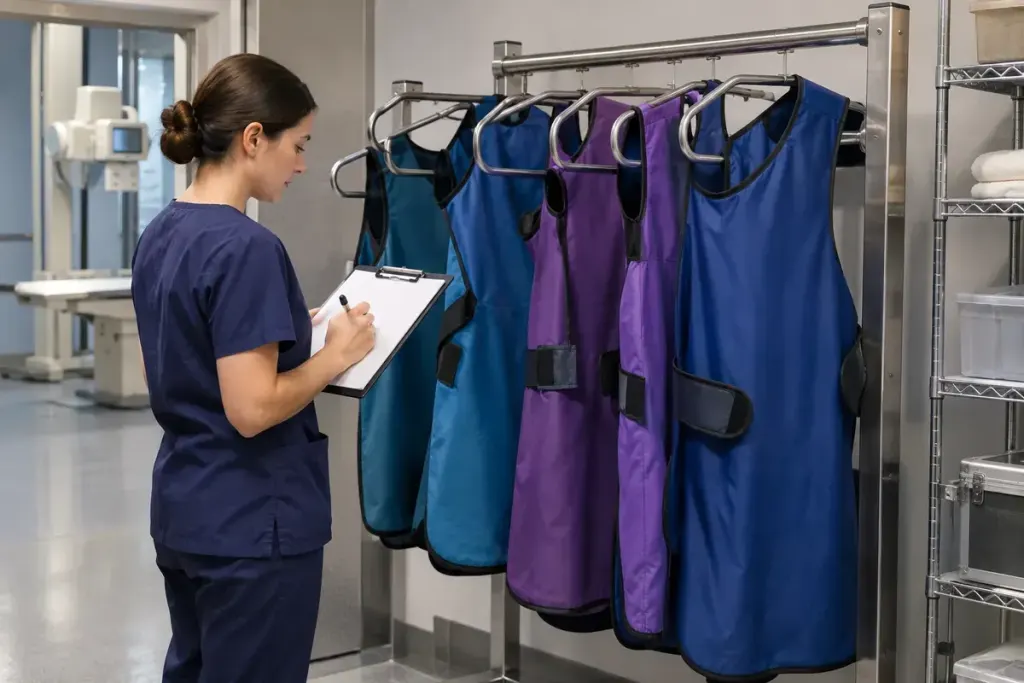
A protective X-ray apron may resemble a heavy garment, but its care belongs in an equipment system. How it is stored, identified and checked matters alongside fit. Hanging an apron back on the nearest chair leaves the next user with little information about its condition.
Give each apron a suitable home
Follow the instructions for the specific product. Protective materials and construction differ, so cleaning and storage advice should come from the manufacturer. For example, these lead-free protective apron instructions address storage without folding or creasing. They are instructions for that product, not a universal specification for every apron.
A designated rack makes returning equipment correctly easier. Check that the support suits the apron’s design and weight, that garments are not crushed together, and that staff can retrieve them without dragging them across the floor. Store accompanying protective items according to their own instructions.
An inspection record needs an identifiable item
A record saying “apron checked” is difficult to use when several similar aprons share a room. Use the workplace’s equipment identifier and record the check date, result, responsible person and next action. Keep the identification method compatible with the product rather than puncturing protective material to attach a label.
A visible check can reveal problems such as damaged fastenings or an obvious tear. It cannot establish that the shielding material is intact internally. The radiation-protection team should define the appropriate inspection method and schedule, taking account of manufacturer instructions and applicable requirements.
Make the route for concerns unambiguous
Staff should know where to place an item with suspected damage and whom to notify before it returns to use. Follow local procedure for taking questionable equipment out of service. Do not improvise a repair or an imaging test.
During an induction, show the storage location and reporting route together. A tidy rack is useful, but a traceable system is what connects an apron on that rack with evidence that it remains suitable for its intended work.