
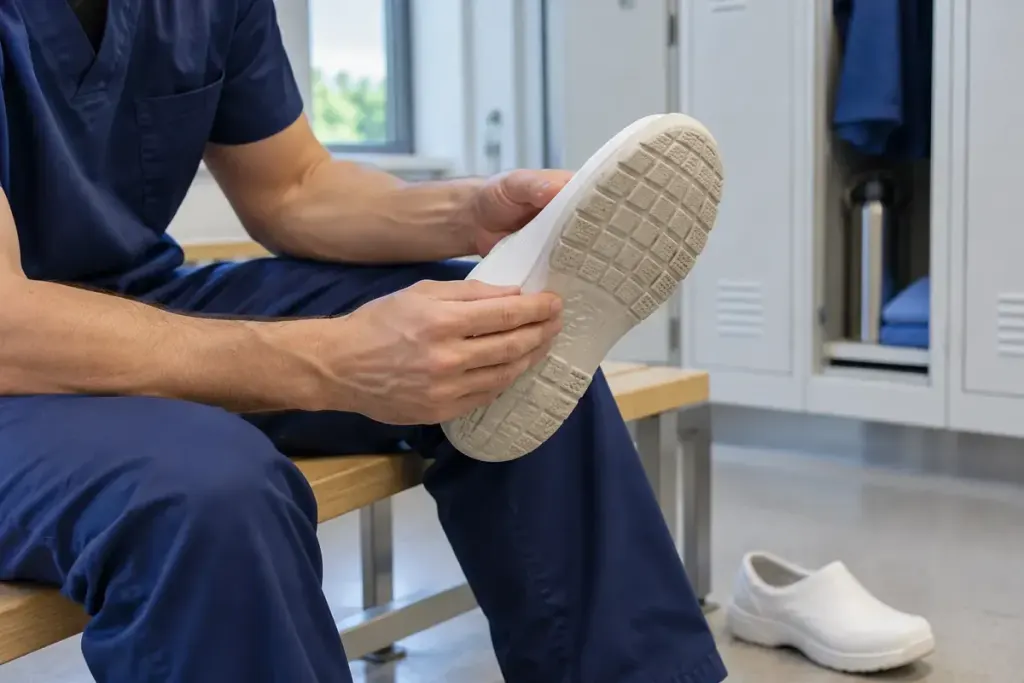
A shoe advertised as slip-resistant may perform differently on a wet corridor, an oily kitchen surface or a floor carrying powdery residue. The label is a starting point for questions, not a promise that the wearer cannot slip.
The Health and Safety Executive’s footwear guidance recommends identifying the relevant surfaces and contaminants and discussing suitable footwear with the supplier. It also distinguishes oil resistance, which concerns damage to the sole material, from resistance to slipping on oil.
Describe the working environment
Before choosing a model, check your employer’s requirements and risk assessment. Consider where you actually walk, including transitions between surfaces, cleaning periods and areas where liquids or debris may be present. Toe protection, infection-control arrangements and other job requirements may also affect the choice.
Ask the supplier what testing supports the claim and what conditions it covers. A tread pattern that looks substantial in a product photo does not establish its performance on your workplace floor. Any trial should be organised through the workplace, not by deliberately stepping onto a spill to see what happens.
Make inspection part of ordinary use
Check for worn tread, damaged soles and debris lodged in the pattern. Follow the cleaning instructions and the workplace’s replacement process. Slip-resistance properties can change as footwear wears, so the condition of the pair you own matters as much as the description it had when new.
For a useful report to a supervisor, describe the location, floor condition and task involved in a near miss. “Slippery near the wash area after cleaning” is more actionable than a general claim that a shoe brand is unsafe everywhere.
Footwear is only one part of prevention. HSE’s health-and-social-care guidance also addresses cleaning, contamination, flooring and obstructions. Report hazards and follow the site’s controls even when wearing the required shoes.
The practical aim is a suitable, maintained pair within a safer working environment. No sole description removes the need to keep floors and routes under control.