
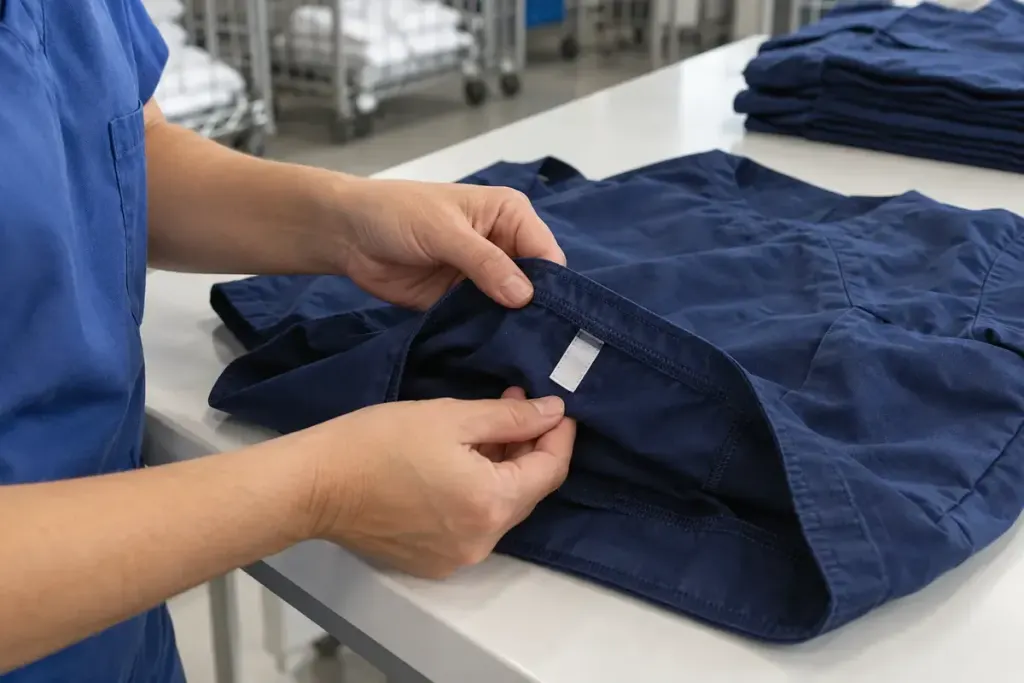
A small label sewn inside a uniform may contain an RFID tag used by the laundry service. It can look insignificant, but removing it may break the link between that garment and the organisation’s issue-and-return records.
RFID systems use a tag and compatible reader to identify an item. Impinj’s description of a textile-tracking solution explains how sewn-in tags can support sorting and recording garments through a laundry workflow. The exact information and process depend on the installed system.
Separate identity from condition
A tag can help a system recognise a particular top. That does not mean the tag itself has washed the garment, assessed contamination or certified that it is ready to wear. Those conclusions depend on the actual laundry process and the organisation’s controls.
Likewise, a successful scan is not a substitute for checking the garment for a reported defect. A tear, uncomfortable label or missing fastener still needs the appropriate reporting route.
Read the care label and workplace instructions separately. Do not assume that every electronic textile tag tolerates the same treatment, or that a general claim about washable tags applies to an unidentified item.
Ask before cutting or altering the label
If the label is irritating or damaged, contact the uniform or laundry coordinator. Explain where it sits and what is wrong rather than cutting it out or moving it yourself. The service can establish whether it is an identification tag and how the garment should be handled.
When a return does not register, keep the collection point and time clear in your report. Follow the employer’s process for resolving the record; repeatedly taking garments through an unrelated reader may not address the issue.
It is also reasonable to ask what information the system records, who can access it and how issue records are associated with staff. Do not infer continuous location tracking simply from the presence of a tag; ask about the actual arrangement.
The useful distinction is straightforward: identification supports management of the uniform, while its cleanliness, safety and suitability remain questions for the relevant processes. Keeping those roles separate makes a tiny sewn-in label easier to understand without giving it capabilities it does not have.