
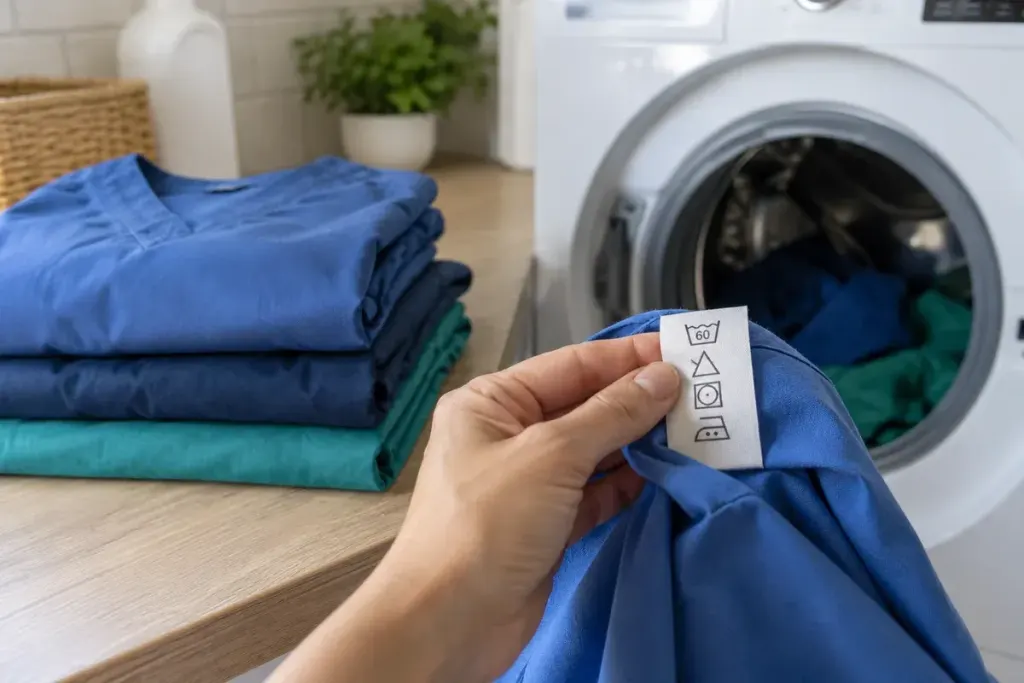
Two instructions can apply to a scrub set: the manufacturer’s directions for preserving the garment and the employer’s requirements for handling work clothing. Neither should be guessed from the fabric’s appearance. Establish the applicable process before the first shift, especially when clothing may need to be handled by the facility.
The CDC’s healthcare laundry guidance discusses different textiles, handling and laundering contexts. It does not turn every household washing routine into a healthcare decontamination procedure. Follow the rules for your role and workplace, including what to do after contamination.
Ask who is responsible for laundering
Find out whether the employer supplies and launders the uniform, permits home laundering or requires a particular service. Ask where used clothing should be placed and how it should be transported when applicable. If clothing is contaminated, follow the workplace procedure rather than bringing it home under an ordinary laundry plan.
Record the answer somewhere you can find it again. Informal advice from a colleague may be useful, but check it against the current written policy or the responsible staff member.
Read the label as a set of limits
Check washing, drying, bleaching and ironing instructions together. A garment that permits one process may not permit another. Avoid improvising disinfectant mixtures or increasing heat on the assumption that more is always better; this can damage fabric and may still fail to meet the required process.
Where the label and workplace requirements appear incompatible, ask the employer or supplier before using the garment. Buying a uniform that cannot tolerate the required care creates an avoidable problem.
Build the routine around the approved process
Empty pockets safely, inspect the garment and follow the specified handling method. Keep clean and used clothing organised according to workplace instructions. Make sure the garment is completely dry before storage, and inspect recurring stains, damaged seams or worn areas rather than hiding them with another wash.
Do not describe an item as sterile or decontaminated simply because it looks clean. Those terms have specific meanings in healthcare settings. For ordinary garment maintenance, keep a short note of the approved detergent and settings so the process is consistent. When duties or employer guidance change, revisit the routine. The aim is to preserve suitable clothing while following the actual requirements of the work.