
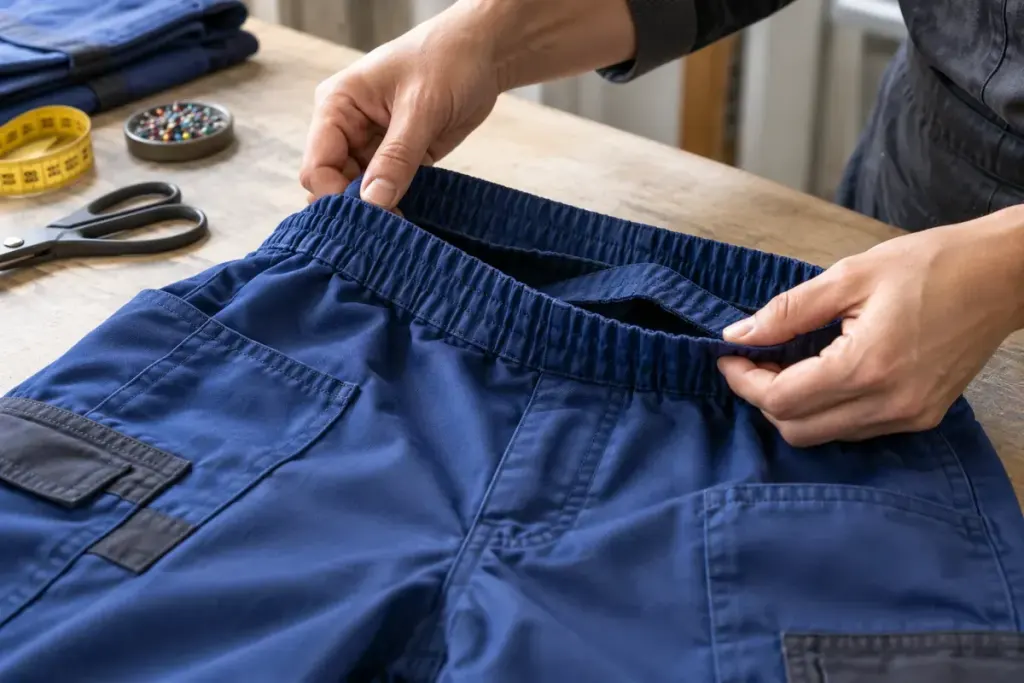
A waistband that rolls or forms a hard ridge can make otherwise serviceable work trousers uncomfortable. Before replacing the garment, inspect it while it is clean, dry and off the body. A twisted elastic strip, a damaged casing and an unsuitable fit are different problems.
Locate the change in shape
Lay the trousers flat and gently feel along the waistband. Compare the uncomfortable section with an area that lies normally. Look for a visible turn in the elastic, a seam that catches it or fabric that has bunched unevenly.
Some waistbands contain loose elastic inside a casing; others have elastic stitched in place. Do not force a stitched construction to move as though it were loose. Check the garment’s information or ask a competent repairer if you cannot identify how it was made.
If a loose strip can be gently returned to its intended position without opening seams or damaging fabric, check the result carefully. Repeated twisting may indicate a construction or fit issue that needs more than a temporary adjustment.
Decide whether repair is appropriate
- Inspect for broken stitching or worn fabric.
- Check whether the elastic has lost its recovery.
- Review the care label for washing and drying limits.
- Follow workplace rules before altering a uniform.
Do not cut into a waistband just to see what is inside when you are unsure how to close it correctly. Protective or regulated workwear may have restrictions on repair and modification, so use the approved route.
After any suitable repair, try the trousers through ordinary movements and check that the waistband remains comfortable without being tightened excessively. Record the model and size if the problem recurs across several garments. That information can help distinguish an isolated defect from a fit or purchasing issue.